DISTRICT LIBRARY
ANNEXATION
Overview
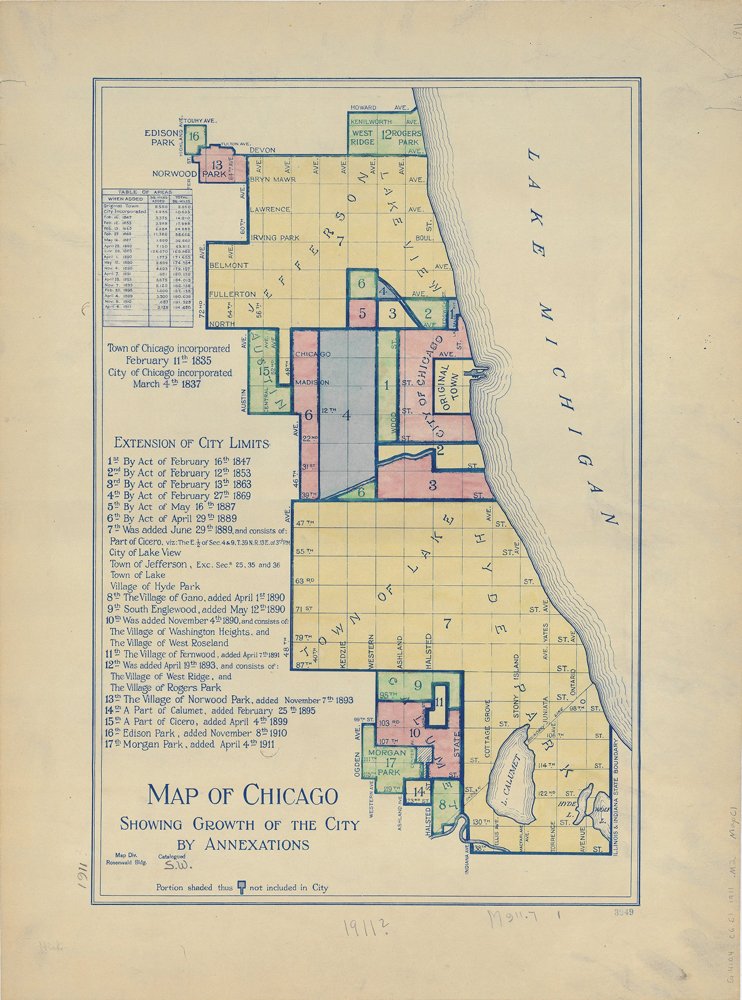 A major difference between local libraries and public library districts relates to annexation. Local libraries have no annexation powers of their own. If an adjoining property owner without library service wishes to annex to a local library, he or she may not do so without also annexing to the city, village, or town. However, when the corporate authorities of the municipality annex a territory, the local public library is similarly expanded.
If the annexed territory is located in a public library district, the territory is disconnected from the public library district and annexed to the municipality with a local library. The municipality must give notice of the proposed annexation to the trustees of the library district. The territory is disconnected and annexed to the local library unless the library district files, with the circuit court, a petition alleging that the disconnection will render it noncontiguous or will impair its ability to give fully adequate library service to the remaining territory. The circuit court conducts a hearing on the petition, is authorized to order that the territory be annexed by the municipality or remain in the library district, and is given a number of factors to consider in reaching its decision.
A public library district may annex territory that is outside the district but contiguous to it. Depending on the circumstances, there are various procedures to follow. These procedures, both legal and political/practical, are the principal focus of this section. But first, a few words about “contiguity”.
Contiguity
Contiguity is the principal threshold requirement in public library district annexations. The term has been defined in many situations, not only in annexation cases but in disconnection and formation matters as well. The courts have attempted but have not always succeeded in applying a uniform definition in all such instances. As a result of less judicial experience in specific library annexation cases, reliance, by analogy, on precedents established in cases relating to municipalities, special taxing districts, and other constructions of the term is advisable.
At least one court has indicated that “there is no cogent reason for suggesting that the word ‘contiguous’ means anything different in one statute than in another.” The courts in Illinois have defined contiguity much more restrictively for annexations of highway right-of-way than for annexation of other types of property. Therefore, the meaning of “contiguous” should be examined in these two separate contexts.
In the municipal context it is possible to annex highway right-of-way, but contiguity includes only that portion which is “adjacent and parallel to” the existing city limits. It is not possible to annex a highway corridor beyond the existing boundaries. This constitutes a forbidden “corridor” or “strip” annexation, and no territory is contiguous to the city that is connected to it by such a corridor. The “adjacent and parallel” test also applies to the question of contiguity of narrow corridors of land owned by a public utility, which are used as connective links between other privately owned tracts of land and the district for annexation purposes.
With non-highway right-of-way property, the word contiguous means that the territory to be annexed must have “a substantial common boundary” with the annexing unit, must have a “common border of reasonable length or width,” or must “touch or adjoin one another in a reasonably substantial physical sense.” Each of these determinations is case-specific, with some consideration given to the visual mpact of the geography involved. For instance, reasonably substantial physical touching is not satisfied by point-to-point touching or “cornering.” Courts have held that touching only 20 feet or a strip of land 50 feet wide is not enough to achieve contiguity but that touching 128.7 feet or 300 feet is sufficient to establish contiguity.
On the other hand, a strip of land 120.5 feet wide and extending perpendicularly for a distance of 2640 feet before connecting to a 72-acre tract of land is not “adjoining” property under the Park District Code. Although compactness (i.e., the ratio of length versus width) is not explicitly or even implicitly required and the irregularity of resulting boundaries in itself is not a fatal defect, they are certainly considerations in assessing whether there is a relatively reasonable substantial physical touching. In the case of coincidental annexations or subsequent annexations, each of the parcels must be substantially contiguous to another.
There is one notable exception to contiguity in the Library Code 75 ILCS 16/15-45, which pertains to the non-referendum annexations involving railroad rights-of-way. For those types of annexations, territory can be annexed to a library district and is considered contiguous to the district, notwithstanding that the territory is separated by a railroad right-of-way. In such a case, the annexation includes the territory described but does not include the railroad right-of-way unless the railroad/property owner agrees.
In all annexations, a map or plat of the annexation area (and usually a boundary map of the district itself) needs to be prepared. Typically, such maps bear on the prima facie case of contiguity and are at least one factor in assessing the relative reasonableness of the physical touching. Another concern that is raised specifically with regard to the map or plat is the accuracy with which it must be prepared.
Illinois courts have indicated that a precise legal description of the annexation territory need not be prepared. Nor does the map have to be drawn accurately to scale or be based on a new survey, but it must fairly apprise the public of the property that is involved. In other words, the library should draw an accurate map so that confusion and uncertainty do not result from recorded maps, deeds, and ordinances that depict inconsistent boundary lines. When considering annexation of platted subdivisions, existing governmental units such as whole townships, cities, villages or, incorporated areas, or school districts, reference can often be made to the boundary maps already in use for those divisions or the plats already on file for the subdivision. Furthermore, such maps can be supplemented by reference to the Supervisor of Assessment’s office or the Election Division office relating to the coding used for taxation and election purposes by the respective offices. By supplementing the map with the listings of actual code numbers or parcel I.D. numbers involved, the territory to be annexed can be more precisely described not only for the ordinance but also for the County Clerk and Recorder of Deeds’ filings.
Non-Referendum Annexations
If no voters reside in the territory to be annexed, it is within the boundaries of a municipality, and it is all or part of private property, the owners can petition the board for annexation. Passage of a district ordinance accomplishes the annexation [75 ILCS 16/15-10].
Also, whether or not there are voters residing in the territory to be annexed, the owner or owners of the property may petition the board for annexation, whether they are in a municipality or not, and passage of a district ordinance accomplishes the annexation [75 ILCS 16/15-30].
Where there is property within the municipality that has no voters residing therein, the board can initiate the annexation process by an ordinance indicating an intention to annex. A 60-day notice of the ordinance must be given to each owner and a written receipt from each obtained. [75 ILCS 16/15-10(c)]. If an owner objects or a receipt is not returned, that owner’s property would be excluded. Otherwise, if still contiguous, the remaining property would be annexed. This procedure can be very successfully employed, if timely, in pre-subdivision development property within a municipality.
A library district may annex, without a petition, any property not already in a public library if there are no voters residing thereon, simply by an ordinance. The territory must be contiguous, and a municipality (i.e., city or village) wholly or partially in the library district must have annexed or included the territory within the municipality [75 ILCS 16/15-35L].
The district may also conduct an annexation without a referendum when the property is contiguous territory dedicated for use as a street or highway under the jurisdiction of the Illinois Department of Transportation or a county or a township highway department if no part of the territory is within any other library district [75 ILCS 16/15-25]. A simple library board ordinance and map will suffice.
In each of these types of annexations, a certified (by the library board’s secretary) copy of the annexation ordinance and map, after adoption, must be filed with the County Clerk and Recorder of Deeds of each county affected.
Referendum Annexations
Back Door Referenda
The Legislature significantly amended 75 ILCS 16/15-15 in 2019 to essentially eliminate this type of annexation for districts.
Front Door Referenda
When 75 ILCS 16/15-15 was amended, the Legislature effectively created an optional process to get a “front door” referendum under special, unique circumstances. Because this “option” does not require a court procedure (as described below), if this can be used, it is both cheaper and more expedient when possible. When there is a municipality or school district that is entirely or partially within a library district and the land is contiguous to the district but has no local tax-supported public library service, the district may initiate an annexation of that land by a “front door” referendum by the passage of an ordinance that describes the territory and recites that the territory to be annexed is within the municipality or school district 75 ILCS 16/15-15. But this annexation process then must comply with the “front door” referendum procedure through the election authority office (most often the county clerks). [Note: In the case of a municipality where there are no voters residing therein, it is better to use the provisions of 75 ILCS 16/15-35]
Proper notice of consideration by the library board of such an ordinance must be sent to the Presidents of any and all library boards with territory within one mile of the territory to be annexed prior to adoption, and a copy of the notice posted on the library’s website. Then, if the ordinance is adopted to conduct a referendum, a copy of the ordinance adopted, the map of the territory to be annexed, and the notice shall be published one time in the newspaper. Within the same 15 days after adoption of the ordinance, a notice of the ordinance adoption, a map depicting the annexation area, and a copy of the publication must be sent to the President of any library board with territory within one mile of the territory to be annexed.
Then the annexation ordinance must be filed with the proper election authorities along with a certification of ballot for the annexation question before the applicable election deadlines. In all cases of a referendum being conducted, the question must pass by a majority of voters in both the district and the territory to be annexed, and if the question fails in the district the entire annexation fails. If the election result approves of the annexation within the district, but the total vote in the territory to be annexed is negative, consideration can be given to the results in each contiguous voting precinct and where the tally is positive that precinct may be annexed even if the entire territory can not be.
A public library district may also annex contiguous territory pursuant to a “front door” referendum through a court-based procedure. The library board or 100 legal voters residing within a territory proposed to be annexed must file with the clerk of the circuit court a petition seeking to have the territory annexed to the library district. The circuit court judge enters an order setting a hearing and naming the presiding judge. At least once, the petitioner must publish a notice in the newspaper of the time, date and place of the hearing and naming the judge. The petitioner must also at that time send a notice of hearing and a map of the territory to be annexed to the President of each public library with territory within one mile of the area to be annexed. The purpose of the hearing is to require the question to be submitted at an election held under the general election law. If approved, the judge enters an order covering the following points:
Fixing the boundaries of the territory to be annexed and for that purpose only and upon a showing of good cause, he or she can alter or amend the petition. Requiring preparation of a map of the district’s boundaries and the boundaries of the territory proposed to be annexed.
Certifying the proposition to the proper election officials in order to submit it to the voters.
The annexation referendum must receive a majority of the votes in the territory proposed to be annexed and also in the territory already within the district. If the annexation election is successful among both categories of voters, the library district is then permitted to adopt an ordinance annexing the territory. It records the ordinance and map with the recorder of deeds and files it with the county clerk of each county in which the annexed territory is located.
If the annexation election is not successful in the existing district, then it is completely unsuccessful. If it is successful in the existing district but not successful in the overall territory to be annexed, portions of that territory that comprise independent voting precincts contiguous to the district where the election was positive can still be annexed. The other precincts where it was unsuccessful will remain outside the district. If the annexation election is not successful, no part of the territory involved may be the subject of another annexation election for one year.
Municipalities, counties, and townships that have a public tax-supported library may also become part of a library district through annexation. The question of annexing must be submitted to the voters at a general or special election and must receive approval by a majority of those voting on the proposition.
Encouraging Adjacent Areas
Any discussion of district library annexations would be incomplete without a comment regarding the library board’s power under 75 ILCS 16/30-55.65 . That section states that “The Board may undertake programs to encourage the addition to the district of adjacent areas without local tax-supported library service and may spend funds for this purpose.”
Such a provision is unique in local governmental law in that other types of governmental units are not given the power to expend public funds for the purpose of “encouraging the addition to” or their expansion through annexation. Typically, legal opinions agree that it is inappropriate, if not illegal, to expend public funds in any effort to “encourage” the expansion of governmental boundaries unless a statute so provides. Expenditures of public funds generally are limited to educational or informational dissemination but not advocacy of expansion.
Important: Information provided in the Library Ready Reference is intended for educational and informational purposes and does not constitute legal advice. When questions involve interpretation of law or the specific circumstances of your library, consult your library attorney.
Merging or Dissolving a Public Library District
Sometimes changing community needs, financial circumstances, service areas, or other local considerations may lead a public library district to explore merging with another district or dissolving the district. These decisions involve specific legal procedures and should be approached carefully.
The Illinois Public Library District Act of 1991 (75 ILCS 16/) provides the statutory framework for these processes. Article 20 addresses the merger of public library districts, including requirements related to eligible districts, board action, notice, petitions, referenda, court proceedings, taxes, and outstanding obligations. Article 25 addresses dissolution of a public library district, including petitions, voter approval, court proceedings, disposition of district property, payment of debts, and the board’s responsibilities for winding up the district’s affairs.
Because a merger or dissolution can affect taxation, property, outstanding debt, library services, district boundaries, elections, and other legal responsibilities, iLEAD recommends involving the library’s attorney early in the discussion. Legal counsel can help the board understand the requirements that apply to its particular circumstances and guide the library through the appropriate statutory process.